Free browser-only screen. No login. No saved answers. Built to diagnose the gap, not replace the implementation work.
RAG disclosure and poisoning lead magnet

RAG / Vector Trust & Data Disclosure Check

Assess in under 5 minutes whether the current RAG and vector pipeline could leak sensitive information or trust poisoned content.

4–5 minutes Browser-only scoring No stored answers Retrieval trust and data disclosure

This screen is for teams using knowledge bases, retrieval-enabled copilots, or internal assistants who need a governance answer before broader rollout or higher-sensitivity data access.

  • Checks source trust, ingestion review, data-classification boundaries, leakage control, takedown readiness, and answer traceability.
  • Flags whether the retrieval posture is controlled, constrained, materially risky, or not governable for enterprise use.
  • Routes to ACT Tier 2 when the missing layer is data-handling policy, incident readiness, evidence, and formal impact review.
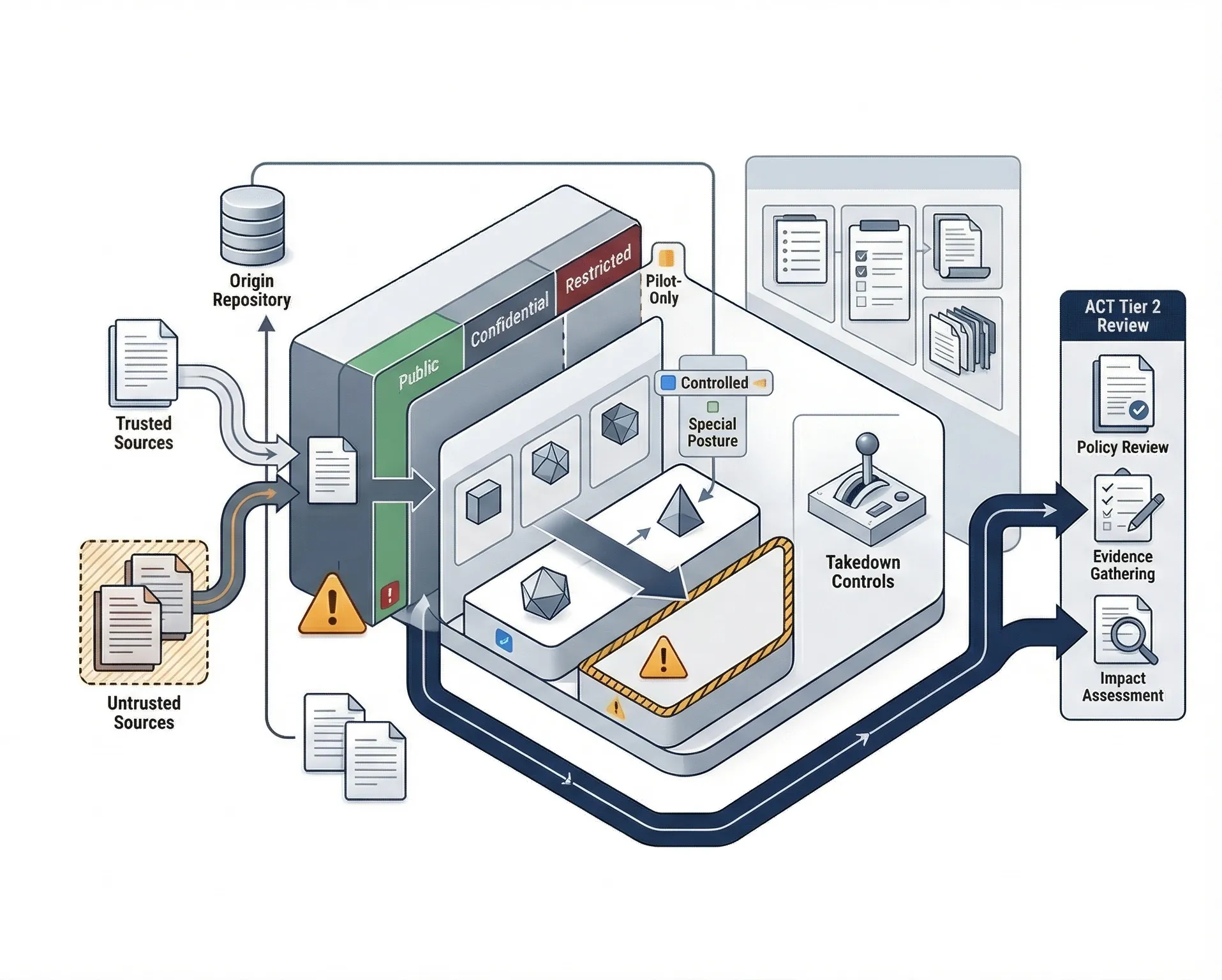
Enterprise retrieval governance illustration showing trusted and untrusted knowledge sources, access boundaries, takedown controls, and evidence-based disclosure investigation readiness.
OWASP-aligned data-trust screen

What this screen is for

This page exists to classify the current posture quickly, surface the biggest gaps, and route the buyer to the correct paid implementation path without giving away the workbook or document layer.

What this tool evaluates

It evaluates whether the current retrieval stack can defend source trust, data boundaries, leakage controls, takedown discipline, and investigation traceability.

What a tighter-boundaries result does not mean

It does not mean the retrieval system is broken. It means wider rollout should wait until trust boundaries, evidence, or review discipline are stronger.

Why ACT Tier 2 is the bridge

The missing value is data handling policy, disclosure response procedure, evidence discipline, and formal impact review. That sits in ACT Tier 2.

Question 1 of 120% complete
Question 1 of 12

What this result should change

The purpose of this screen is to classify posture quickly, highlight the biggest gaps, and route the organization to the correct next step without giving away the paid implementation layer.

What this tool evaluates

It evaluates whether the current retrieval stack can defend source trust, data boundaries, leakage controls, takedown discipline, and investigation traceability.

What a tighter-boundaries result does not mean

It does not mean the retrieval system is broken. It means wider rollout should wait until trust boundaries, evidence, or review discipline are stronger.

Why ACT Tier 2 is the bridge

The missing value is data handling policy, disclosure response procedure, evidence discipline, and formal impact review. That sits in ACT Tier 2.

Where to go next

Use the paid bridge when the screening result shows structural control gaps that need policy, procedure, evidence, lifecycle discipline, or implementation ownership rather than another free quiz.

This page is informational only. It does not provide legal advice, compliance certification, or an audit conclusion.

Frequently asked questions

Practical answers about RAG trust, vector-layer governance, and data-disclosure exposure.

What does this tool check?
It checks whether your retrieval layer is governed well enough to trust the sources, control disclosure risk, and explain how retrieved content influences outputs and actions.
Who should use this screen?
Use it if your AI system retrieves documents, knowledge-base content, external references, vector-search results, or mixed trusted and untrusted sources before generating an answer or action.
Does this tool scan our vector database or documents?
No. It does not inspect your content, index, or embeddings. It is a governance screen that helps you judge whether source trust, ownership, access, and review controls are mature enough.
Why does source ownership matter so much?
Because retrieval becomes harder to trust when nobody clearly owns the source, approves ingestion, or can explain how stale, poisoned, or sensitive content is handled.
What does a weak result usually mean?
Usually it means the retrieval layer is pulling from broad or poorly governed sources, with weak trust tiering, limited disclosure review, or missing evidence on what content can influence outputs.
Does this tool store or transmit my answers?
No. This tool runs entirely in your browser. Your selections are not stored, synced, exported, or transmitted by the page itself.