ACT-2 Professional: AI Governance Implementation Evidence Pack
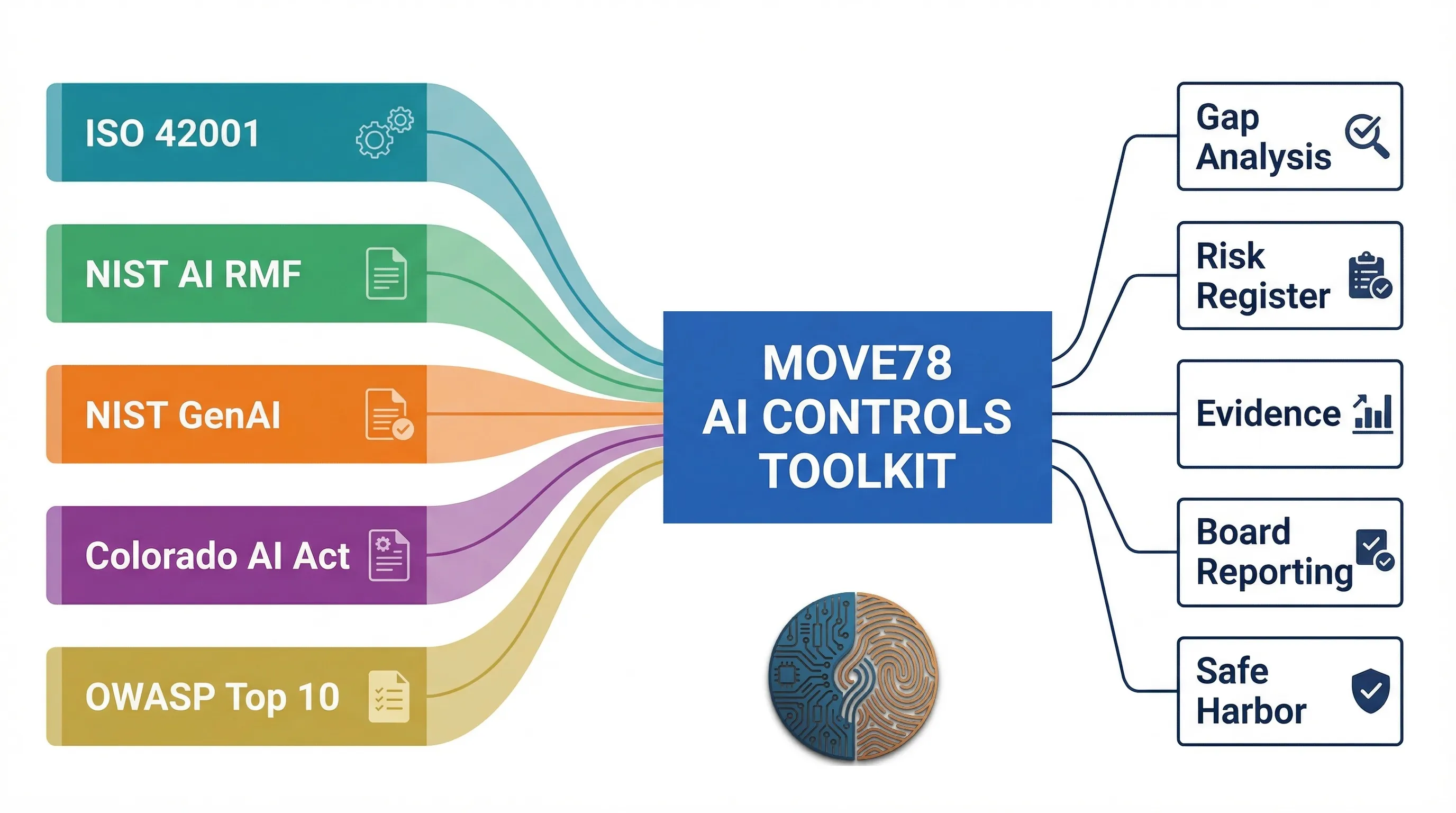
ACT-2 Professional is a digital AI governance implementation evidence pack priced at USD 1,299. Confirm the current package file list and formats with Move78 before payment.
ACT-2 is a file-based implementation evidence pack. It is not SaaS, legal advice, audit assurance, certification support, regulator acceptance, safe-harbor assurance, buyer approval, or security assurance.
Decide in 30 seconds
Compare the current ACT-1 and ACT-2 file lists with your evidence needs before choosing. The Sprint is a separate service for existing ACT-2 buyers, subject to fit review.
Buyer or board evidence
You need a clear evidence story for management, customers, procurement, or internal assurance teams.
Only first records
You only need a starter inventory, risk register, gap checklist, and acceptable-use baseline.
Need guided rollout
You need help assigning owners, sequencing implementation, and turning the files into a 30-day backlog.
Need SaaS automation
Use a GRC or AI governance platform if the immediate need is live workflow, API integration, logging, or monitoring.
Decision rule
Compare the current ACT-1 and ACT-2 file lists with your evidence needs before choosing. The Sprint is a separate service for existing ACT-2 buyers, subject to fit review.
Confirm the package before payment
Confirm the current package file list, formats and any framework mappings with Move78 before payment. Only the deliverables agreed in the invoice or order are included.
File list
Ask for the current file list. Public samples do not establish paid-package contents.
Scope and formats
Confirm which records and editable formats are included in your order.
Framework mappings
Confirm any required framework mapping against the actual package. Do not assume exhaustive or current-law coverage.
Order record
Check that the agreed deliverables are recorded in the invoice or order before payment.
Compare package scope before choosing
ACT-1 and ACT-2 are separate purchase options. Confirm the file list for each; a public preview does not establish that one package includes another.
| Need | ACT-1 | ACT-2 |
|---|---|---|
| Baseline records | Confirm against the current order file list. | Confirm against the current order file list. |
| Policy system | Confirm against the current order file list. | Confirm against the current order file list. |
| Board or buyer evidence | Confirm against the current order file list. | Confirm against the current order file list. |
| Agentic AI and MCP | Confirm against the current order file list. | Confirm against the current order file list. |
Who ACT-2 is not for
Not for single-template buyers
Confirm the current package scope before deciding whether it fits your evidence requirements.
Not a SaaS or assurance product
ACT-2 does not provide hosted workflow, API integration, live monitoring, legal opinions, certification assurance, audit assurance, or buyer approval.
Choose ACT-2 when the buyer needs implementation evidence.
Compare the current ACT-1 and ACT-2 file lists with your evidence needs before choosing. The Sprint is a separate service for existing ACT-2 buyers, subject to fit review.
Frequently asked questions
These answers help with buying and implementation decisions. They do not provide legal, audit, certification, buyer-approval, or security assurance.
What is ACT-2 Professional?
ACT-2 Professional is a digital AI governance implementation evidence pack priced at USD 1,299. Confirm the current package file list and formats with Move78 before payment.
Who should choose ACT-2?
Choose ACT-2 when a buyer, board, auditor, risk owner, procurement team, or technical governance owner is asking for connected evidence, not just a basic inventory or policy.
Does ACT-2 include ACT-1?
Confirm the ACT-2 file list before payment. Do not assume ACT-1 files are included unless the invoice or order explicitly lists them.
Is ACT-2 a SaaS platform?
No. ACT-2 is a file-based evidence pack. It does not provide hosted workflow automation, log ingestion, API integrations, runtime monitoring, access control, or continuous attestation.
Does ACT-2 guarantee compliance or safe harbor?
No. ACT-2 supports evidence preparation and implementation structure. It does not guarantee compliance, certification, audit results, regulator acceptance, buyer approval, Colorado safe harbor, or security outcomes.
When should we add the Sprint?
Add the Sprint when the team needs help assigning owners, sequencing work, reviewing evidence gaps, and building a 30-day implementation backlog from the ACT-2 materials.
Source and review note: This page describes a file-based implementation evidence product. It is not legal, tax, audit, certification, conformity-assessment, buyer-approval, safe-harbor, or security advice. ACT-2 supports evidence preparation and internal implementation ownership.