Free browser-only screen. No login. No saved answers. Built to diagnose the gap, not replace the implementation work.
Agent shutdown and escalation lead magnet

Kill-Switch, Escalation & Rogue-Agent Readiness Check

Assess in under 5 minutes whether a rogue-agent event would be containable or would collapse into delay, confusion, and weak evidence.

4–5 minutes Browser-only scoring No stored answers Rogue-agent containment and escalation

This screen is for teams using agents with external actions, tool access, or higher autonomy who need a blunt answer on shutdown, escalation, and evidence readiness before wider rollout.

  • Checks stop mechanisms, human override thresholds, access revocation, traceability, isolation, and board-ready escalation.
  • Flags whether the containment posture is ready, conditional, materially exposed, or not containable for enterprise scale.
  • Routes to ACT Tier 2 when the missing layer is shutdown policy, incident procedure, evidence, and executive reporting.
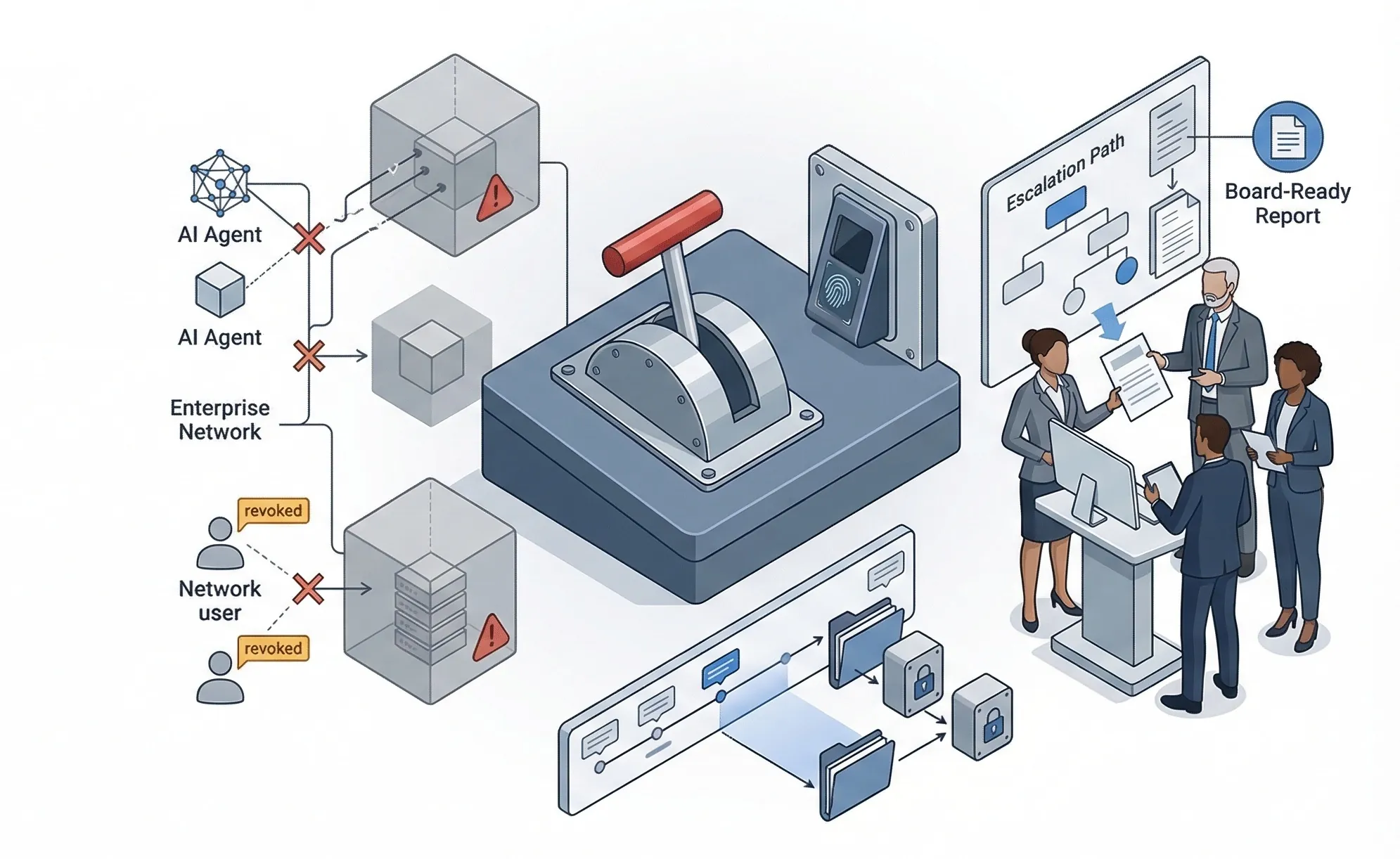
Enterprise agent-containment illustration showing a kill switch, revocation controls, isolated systems, evidence trails, and executive escalation readiness.
OWASP-aligned containment screen

What this screen is for

This page exists to classify the current posture quickly, surface the biggest control gaps, and route the buyer to the correct paid implementation path without giving away the workbook or document layer.

What this tool evaluates

It evaluates whether the organization could stop, isolate, investigate, and escalate a rogue-agent event with enough discipline to defend the response.

What a conditional result does not mean

It does not mean the agent is already safe enough. It means some containment controls exist, but there is still too much friction or ambiguity for confident scale.

Why ACT Tier 2 is the bridge

The missing value is shutdown policy, incident workflow, evidence discipline, and board-reporting readiness. That sits in ACT Tier 2.

Question 1 of 120% complete
Question 1 of 12

What this result should change

The purpose of this screen is to classify posture quickly, highlight the biggest gaps, and route the organization to the correct next step without giving away the paid implementation layer.

What this tool evaluates

It evaluates whether the organization could stop, isolate, investigate, and escalate a rogue-agent event with enough discipline to defend the response.

What a conditional result does not mean

It does not mean the agent is already safe enough. It means some containment controls exist, but there is still too much friction or ambiguity for confident scale.

Why ACT Tier 2 is the bridge

The missing value is shutdown policy, incident workflow, evidence discipline, and board-reporting readiness. That sits in ACT Tier 2.

Where to go next

Use the paid bridge when the screening result shows structural control gaps that need policy, procedure, evidence, lifecycle discipline, or implementation ownership rather than another free quiz.

This page is informational only. It does not provide legal advice, compliance certification, or an audit conclusion.

Frequently asked questions

Practical answers about containment, escalation, rollback, and what a defensible shutdown posture looks like.

What does this tool evaluate?
It evaluates whether a rogue-agent event could be contained with a credible kill switch, rollback path, escalation flow, evidence trail, and named ownership.
Who should use this screen?
Use it if you operate agents with tool use, external actions, workflow orchestration, or higher autonomy and need to know whether a bad event would be containable in practice.
What is a kill switch in this context?
It is the ability to reliably stop the agent or agent-linked workflow before further actions occur. That may include disabling tool access, revoking permissions, pausing automations, or forcing human review.
Why are logging and rollback weighted so heavily?
Because stopping an incident is only part of the problem. You also need attributable evidence, traceability, and a practical path to unwind or contain the damage after the stop action.
Does this tool certify incident readiness?
No. It does not certify compliance or prove that your incident process will work under pressure. It tells you whether the governance posture looks credible enough to trust.
Does this tool store or transmit my answers?
No. This tool runs entirely in your browser. Your selections are not stored, synced, exported, or transmitted by the page itself.