Agentic incident response
Agentic AI Incident Log + Shutdown Playbook
Log agent incidents, classify autonomy failures, document kill-switch decisions, and retain rollback evidence.
Open artifact page →Assess in under 5 minutes whether prompt injection and excessive agency could turn the current AI deployment into an enterprise control failure.
This screen is for leaders who need a governance answer before a copilot, assistant, or agent gets broader tool access, more autonomy, or access to higher-impact data.
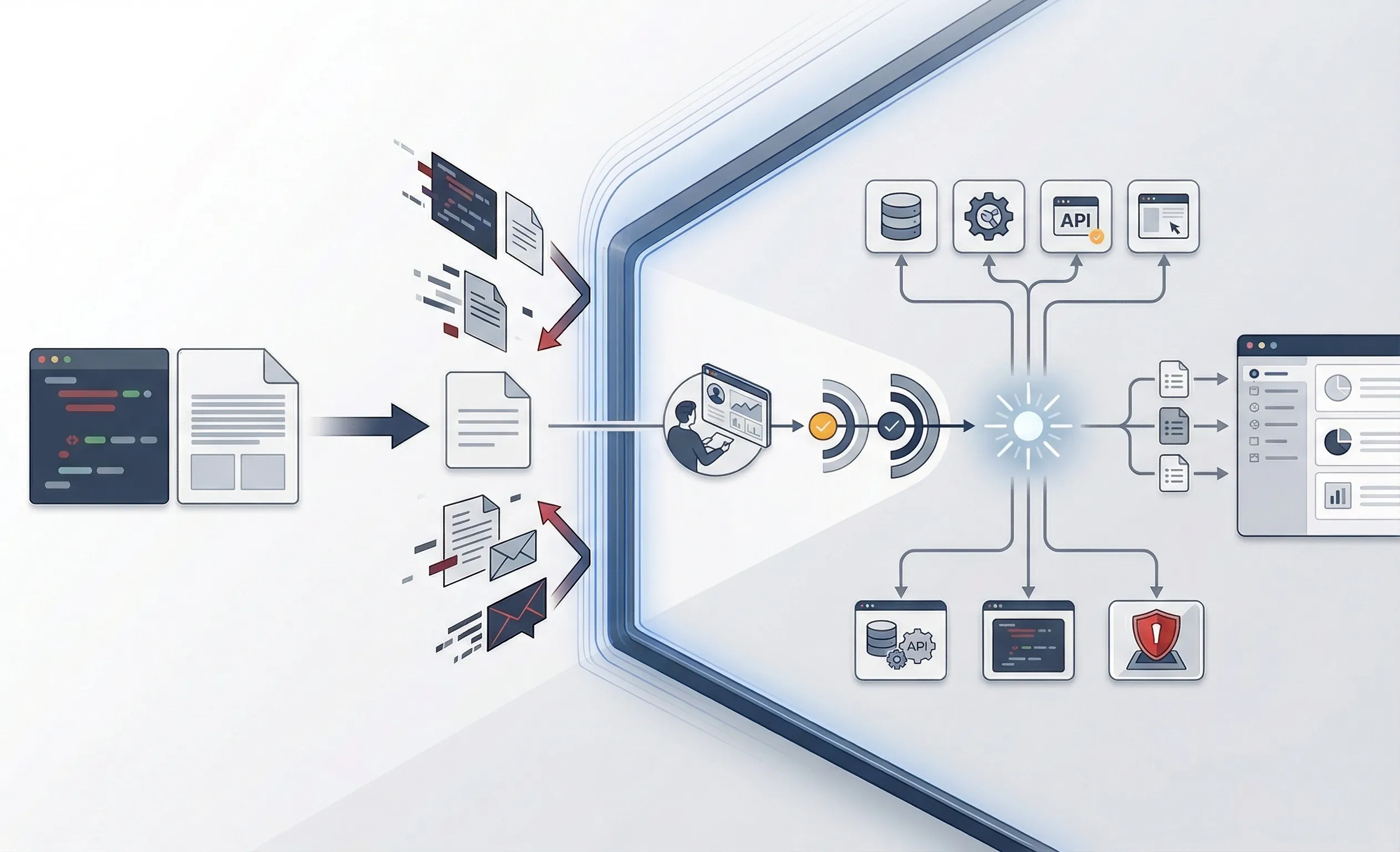
This assessment classifies the current posture quickly, surface the biggest control gaps, and surface governance gaps and recommend the appropriate implementation path.
This assessment evaluates whether the current autonomy design can be defended with controlled inputs, bounded actions, human approvals, shutdown discipline, and usable evidence.
A lower score does not mean there is no prompt injection risk. The result means the governance posture is more constrained and more defensible than the alternatives.
The missing value is policy language, approval thresholds, incident procedure, evidence discipline, and executive reporting. That sits in AI Controls Professional.
This section highlights the key governance gaps the assessment identified and recommends appropriate next steps.
This assessment evaluates whether the current autonomy design can be defended with controlled inputs, bounded actions, human approvals, shutdown discipline, and usable evidence.
A lower score does not mean there is no prompt injection risk. The result means the governance posture is more constrained and more defensible than the alternatives.
The missing value is policy language, approval thresholds, incident procedure, evidence discipline, and executive reporting. That sits in AI Controls Professional.
When the assessment reveals structural control gaps requiring policy, procedure, evidence, lifecycle discipline, or implementation ownership, AI Controls Professional provides the full implementation evidence pack.
Get the implementation documents, procedures, evidence assets, and governance pack this free screen intentionally does not generate.
Read the OWASP Top 10 For Large Language Model Applications guide to understand the underlying control themes and risk categories.
Read the OWASP Top 10 Agentic AI guide to understand the underlying control themes and risk categories.
Read the governance guide for the policy, ownership, and control architecture behind this screen.
It checks whether prompt-injection and excessive-agency risks are being governed with real boundaries, approval thresholds, shutdown controls, evidence trails, and named ownership. It is a governance assessment, not a model benchmark.
Use it if you run or are planning a copilot, assistant, agent, or tool-using workflow that may read untrusted content, trigger actions, or reach higher-impact data and systems.
No. A stronger result only means your current governance posture is more defensible than the weaker states. It does not mean the underlying technical risk disappears or that no further testing is needed.
Because unsafe autonomy becomes materially more dangerous when the system can act without a clear approval threshold. Human review is one of the few controls that can interrupt a bad chain before it becomes an operational incident.
It means some controls exist, but they are not strong enough for confident scale. The safer interpretation is limited use while you tighten policy, escalation, evidence, and action boundaries.
No. This tool runs entirely in your browser. Your selections are not stored, synced, exported, or transmitted by the page itself.
When excessive agency or prompt-injection exposure is visible, the useful next step is a response artifact that defines logging, containment, shutdown, and post-incident review.
Log agent incidents, classify autonomy failures, document kill-switch decisions, and retain rollback evidence.
Open artifact page →Source and review note: This page was last reviewed on 6 May 2026 against the current Move78 public site baseline and relevant official or authoritative sources where laws, standards, frameworks, cybersecurity controls, product scope, pricing, support policy, or implementation guidance are discussed. It provides operational implementation guidance and product information only; it is not legal advice, tax advice, audit assurance, certification assurance, conformity-assessment advice, buyer-approval assurance, or security assurance. Validate legal, regulatory, contractual, tax, audit, and security decisions with qualified professionals.